
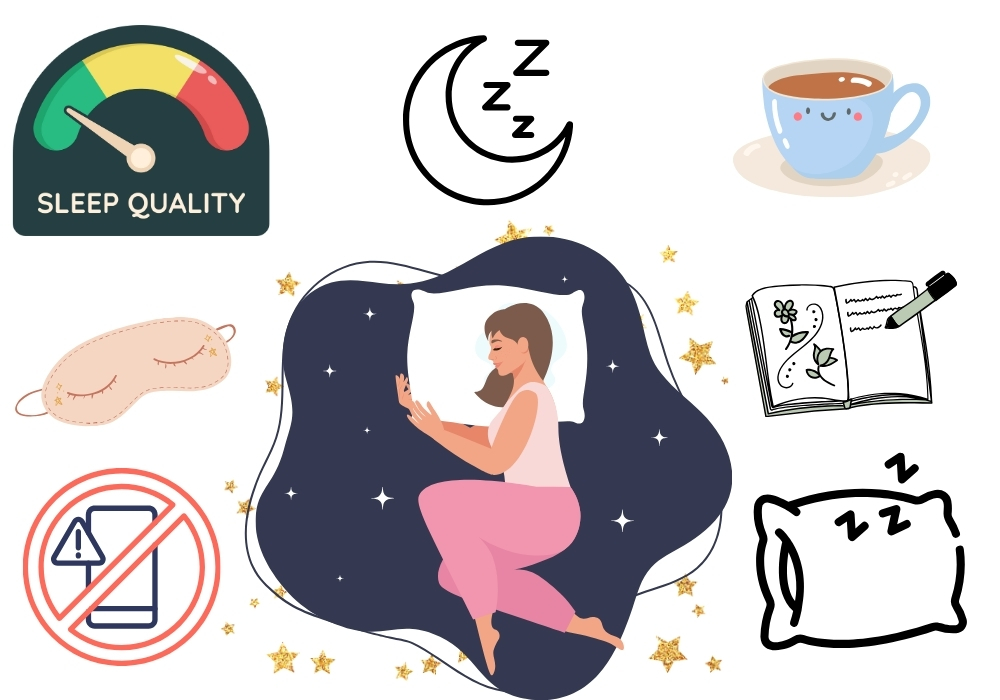
We all know how important sleep is and strive to get as much of it as we can… but are we actually getting deep, restorative sleep? That’s not as easy! I find that it takes me quite a while to get to sleep, plus I find myself waking up multiple times in the night and this leaves me waking up feeling like I’ve barely slept… not ideal for getting a good night’s sleep!
So, I decided to set myself a 7 day sleep challenge, incorporating small rituals each evening to see if it makes any difference in improving the quality of my sleep, or even to see if it could help me drift off a little faster.
Here’s how it went…
Day 1: No screens 30 minutes before bed
On day 1 and the phone went on charge, tucked away for the night to get me away from scrolling and the blue light from the screens. Blue light from screens interferes with melatonin, the sleep hormone, and endless scrolling can keep your mind from winding down.
No more doomscrolling – as an avid reader, switching to reading before bed is something I often do, but I made an intentional shift and told myself not to touch my phone at all. This included my kindle: so I popped down to the local library and grabbed a physical book to settle down with and help my mind to unwind.
Day 2: Breathwork before bed
Your breath is directly linked to your nervous system. By taking slow, intentional breaths, you lower your stress hormones and tell your body you are safe and ready for sleep.
I spent 5-10 minutes inhaling for 4, exhaling for 6 and this worked wonders to help me calm my mind and body as I got ready for bed.
Day 3: A calming cup + support from within
Today I decided to add to my ritual with a warming drink. My drink of choice with the WelleCo Evening Elixir as it’s a low calorie, cocoa infused treat infused with goodies to help you sleep, but you can also try a herbal tea like chamomile, lemon balm or lavender. These help to signal to your body that the day is done: and gives you time to pause and be present with each warm sip.
You could also explore natural supplements like magnesium to help to soothe your muscles and calm the nervous system, or you could try herbal blends with things like ashwagandha or passionflower. These can help support your sleep too.
Together, these help to nourish your body and mind and help you unwind and prepare for deep sleep.
Day 4: A sleep sanctuary reset

Your environment shapes your rest and can make all the difference when putting you in the right frame of mind to sleep. Spend some time tidying up your space, get some fresh sheets on the bed and if you have a room/pillow spray, spritz some on the bedding are a few things you could do. These things can help your brain to associate your bedroom with a calm space and make your bedroom feel like a retreat.
When you get into bed – take a moment to become aware of your surroundings. Do you feel too hot or too cold? Is your bed comfortable, do you need to adjust your pillows? Are you thirsty or need to use the toilet? Is there anything distracting – a ticking of a clock, a light from a device, anything that might stop you from getting a better night’s sleep.
Day 5: Tech-Free Bedroom
Today I amped up my ‘screen-free’ evenings by creating a tech free bedroom. This reduces the temptation of late-night scrolling or checking in the middle of the night. It reduces stimulation and helps your bedroom to become a sanctuary of rest. We’re not ones to have a TV in the bedroom, but if you do, try moving it for a night or two to avoid temptation or even just unplug it. This also ties in with yesterday’s point: moving all tech from the room might also include removing things like make noises like clocks or those little standby lights that might be unconsciously disrupting your sleep.
Day 6: Skincare is Self-Care
Your evening skincare can be more than just your skincare routine – it can be part of your ritual to help you get a better night’s sleep. It can be a grounding practice, a moment of ‘me-time’ to reconnect with yourself and slow down too. Massaging in an oil or cream can help to calm the nervous system.
Day 7: Journal your day
Do you find that racing thoughts are what keeps you up at night? It’s one of the biggest barriers to sleep. Writing down your worries can help to offload them. Gratitude journaling can also help you to shift your thoughts and focus on what’s good. Try doing a brain dump of what’s on your mind, unfiltered. This helps to clear the mental clutter and create space for rest. You can even journal about how you’re finding this sleep reset – what’s working, what’s not, what you’d like to continue.
By intentionally making time to focus on your sleep, your sleeping habits and forming a routine around this, you can help improve not only the amount of sleep, but the quality of it. These techniques have helped me to improve my sleep hygiene and I’m feeling better already!
Feel free to either treat each day as their own or you can even habit stack them – building the habits together into an evening ritual to help you get a better night’s sleep. Or take which ones work for you and build your own routine. So… how do you feel? Are you feeling more rested after taking part in this sleep challenge?
Article by Jessica Reid









Leave A Comment