
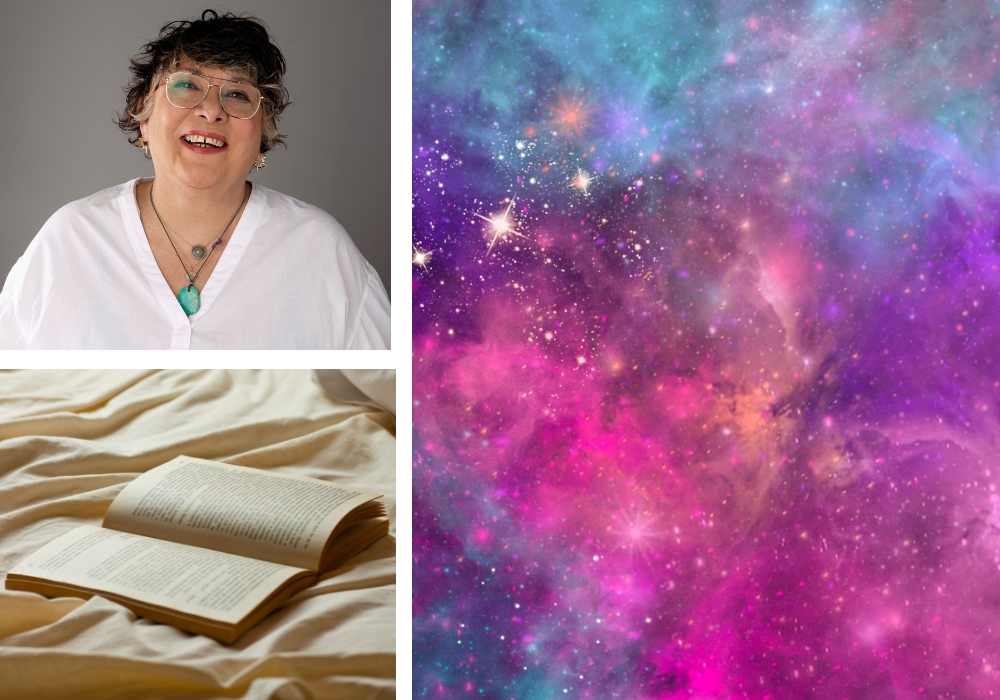
Sleep is a portal to restoration, but many of us struggle to enter it with ease. Here, Healer and Aromatherapist Michelle Roques O’Neil shares wisdom on reclaiming the art of restful sleep.
Sleep is so vital to our well-being; it’s a magical portal that transports us from the realm of the material to the immaterial, a world where the daily problems of life can be resolved. If only that was true in the hustle and bustle of twenty-first-century living. In this case, our snooze function has been reset to the necessary rather than the indispensable. As a result, we suffer; truth be told, we’ve become unskilled in the art of good sleep, firmly stuck in “must do” rather than “could choose not to”.
Why do we rarely set the scene for sleep as we would for a bath? Could it be because it’s habitual? Are we just too busy? Does it simply get factored into a long to-do list? In fact, how many of us navigate our way to sleep whilst still swiping on our phones or just glancing over some unfinished work or document, or after late-night TV? It’s, therefore, no accident that good sleep has become so rare and disturbed, especially when we retire with nervous systems amped with stress and overstimulated minds. Many people go to sleep with their phones by their bedside, which is like having a satellite dish by their heads. Instead, if you leave your phone by your bedside, start setting it to sleep mode. Poor sleep impacts every system in the body. It impairs its natural functions, such as memory, health, concentration, mental health, and weight management.
Sleep is similar to our breath; without it, we cannot function, so cherishing good sleep is like cherishing ourselves. It’s the kindness of serenity and stillness. Optimum sleep requires between 7-9 hours. Have you ever heard of the 10,3,2,1,0 rule? 10 – don’t drink caffeine 10 hours before sleep, 3 – avoid food or alcohol 3 hours before sleep, 2 – avoid work two hours before sleep, 1- avoid screen time one hour before sleep, 0 – avoid using the snooze button in the morning.
Remember that your sleep comprises four cycles: three non-rapid eye movement cycles (NREM) and one rapid eye movement cycle (REM). The entire cycle takes about 90 minutes, but the duration can vary; usually, you can have four to six cycles per night. These sleep stages allow the brain to recuperate and perform many other functions, such as repair.
It’s the 3rd stage or N3 that is so critical to reach. This is called slow or delta wave sleep and the most is the most restorative sleep. Its believed to be critical for bodily recovery and growth; this deep state contributes to insightful thinking, creativity and memory. The fourth stage, REM sleep is essential to our cognitive functions like memory. In REM sleep we experience our most vivid dreams, our dreams occur in all sleep stages, but they’re less common and intense. Taking positive steps to improve your sleep hygiene helps a healthy transition within these sleep stages. Because many of us struggle with good sleep hygiene, we tend to hover in wakeful sleep, lingering around stages one and two; therefore, it’s not surprising we wake up feeling tired and out of sorts.
Take a moment to visualise your perfect sleep oasis and try to schedule sleep preparation, create your perfect wind down routine, this could include a warm shower or bath, meditation or yin yoga with some calming incense or a scented candle burning. I love to read some words of wisdom before I sleep and generally my very last practice is giving thanks for the day that’s gone, celebrating the big and little things that have happened, chance encounters and meaningful conversation and the serendipity of a soulful passage suddenly found; I end this with a gentle inner smile heart meditation, taking a few deep breaths and I am ready to drift off to sleep.
Article by Michelle Roques O’Neil, Aromatherapist, Reiki Master, reflexologist and healer.









Fantastic. This post was so amazing. I really like this post. I appreciate your hard work.