
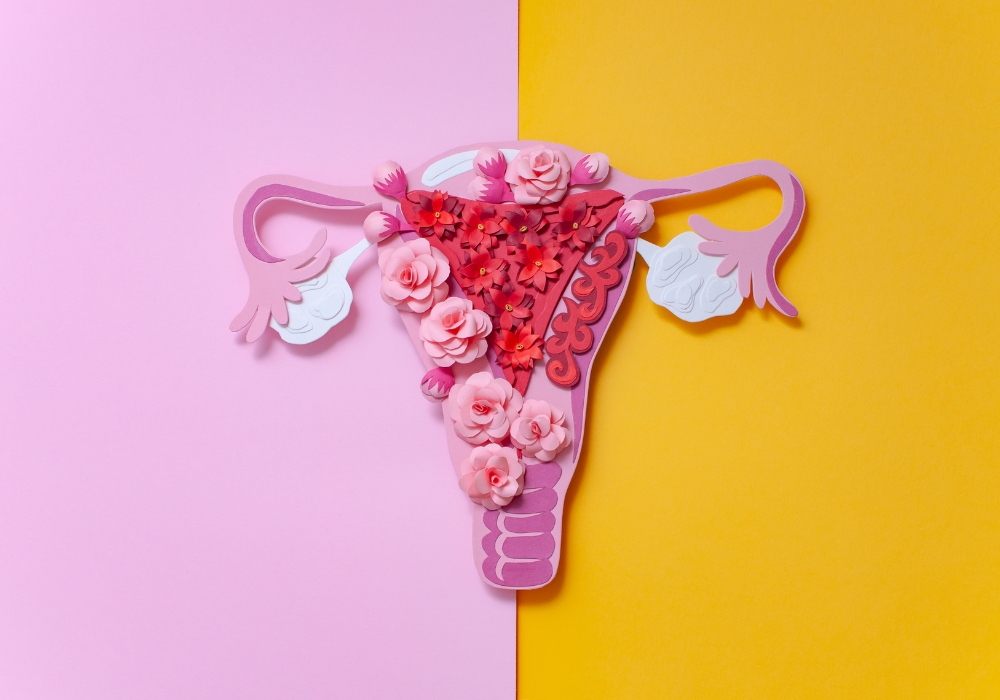
March is Endometriosis Awareness Month. This is a condition that affects 1 in 10 women, yet it often remains misunderstood and undiagnosed… taking on average a whopping 7-10 years to diagnose. But what is Endometriosis? Let’s talk about it.
What is Endometriosis?
“Endometriosis is defined as an estrogen-dependent inflammatory and immune disease in which tissue similar to the lining of the uterus (endometrial-like tissue) grows outside of the uterus. This condition affects approximately 5-10% of the female population,” says Dr Ruqia Zafar, Medical Director of FUTURE WOMAN bHRT Clinic.
Endometriosis occurs when tissue similar to the lining of the uterus grows outside of the womb, which causes inflammation and severe pain. Endometriosis tissue acts as the lining inside the uterus would – thickening, breaking down and bleeding with each menstrual cycle. But when it grows in places it doesn’t belong, it doesn’t leave the body and the surrounding tissue becomes irritated and form scar tissue. Bands of fibrous tissue called adhesions can also form and it can cause pelvic tissues and organs to stick to each other. It can also lead to complications such as infertility and chronic pelvic pain.
A laparoscopy is the only definitive way to diagnose endometriosis and involves a surgical procedure where a surgeon may take a biopsy of the suspicious tissue for confirmation.
While it mainly affects women, it can also impact trans and non-binary individuals.
What causes Endometriosis?
“While endometriosis is influenced by estrogen, it is not considered a hormonal condition.
Estrogen can act as a driver of the inflammation and pain, causing the endometrial-like tissue to thicken, but it does not cause the initial growth outside the uterus. Women with endometriosis often have high levels of estrogen.
The exact root cause of endometriosis is not yet fully understood, and more research is needed in this area. However, several theories exist regarding its development, including retrograde menstruation, genetics, toxin exposure, bacteria, and hormonal factors.
Importantly, endometriosis is considered a whole body inflammatory disease where the immune system plays a significant role. In individuals with endometriosis, the innate immune system may not effectively clear up misplaced endometrial tissue, potentially allowing gram-negative bacteria to thrive. This leads to a dysregulated immune response and increased inflammation, particularly in the peritoneal cavity,” says Dr Ruqia Zafar, Medical Director of FUTURE WOMAN bHRT Clinic.
Dr Ruqia Zafar has also shared with us several factors that are considered potential drivers of endometriosis:
- Dysfunctional immune activity and inflammation: An abnormal immune response leads to increased inflammation and proliferation of endometriosis.
- Toxin exposure: Research suggests environmental toxins like dioxins, found in the food chain and other sources, may contribute to immune dysregulation and inflammation in endometriosis.
- Gut bacteria: An imbalance in gut bacteria, with higher levels of gram-negative bacteria such as Escherichia coli, and the presence of endotoxins, may be a driver.
- Epi-genetics: Environmental and gut toxins can cause permanent changes in gene expression, potentially increasing the risk of endometriosis and affecting immune and hormonal changes.
- Estrogen: While not the cause, estrogen can exacerbate inflammation and pain in endometriosis by thickening the endometrial-like tissue.
What are the Symptoms of Endometriosis?
The primary symptom of Endometriosis is pelvic pain, often linked with menstrual periods, although far worse. It also often gets worse over time. Here are some common symptoms:
- Painful periods: period pains start before a menstrual period and can last for days afterwards, as well as experiencing lower back and stomach pain.
- Pain with sex: this could be pain during or after sex.
- Pain with bowel movements or urination.
- Excessive bleeding: you may have heavy menstrual periods or it could mean bleeding between periods.
- Infertility: sometimes, endometriosis is first discovered during tests for infertility treatments.
Other symptoms include fatigue, diarrhoea, constipation or bloating… and some people don’t get any pain at all, only discovering endometriosis when they’re struggling to get pregnant or when having other surgery. Some people experience less typical symptoms, like leg pain, nerve pain, and nausea too.
Different Types of Endometriosis
There’s 4 main types of endometriosis and you can have more than one type. They are:
- Ovarian endometriosis (endometrioma): when endometriosis cysts are found in the ovaries.
- Peritoneal (superficial) endometriosis: found mainly in the pelvic peritoneum. This is the thin film that lines the inner surface of the pelvis, surrounding the pelvic organs.
- Deep endometriosis: found in places like the bladder, bowel and recto-vaginal septum (tissue separating the vagina and rectum). Lesions are at a deeper level than Peritoneal (superficial) endometriosis.
- Extra-pelvic endometriosis: when endometriosis is found outside of the pelvis area, such as the chest and in caesarean scars.
Different Stages of Endometriosis
The stages are based on what can be what is physically seen during surgery (laparoscopy), rather than pain levels or symptom severity. They are
Stage 1: Minimal
- Small implants (patches of endometrial-like tissue) found on organs or pelvic lining.
- Little to no scar tissue (adhesions).
Stage 2: Mild
- More and deeper implants than in stage 1.
- Some scar tissue may be present.
Stage 3: Moderate
- Numerous deep implants.
- Small cysts (endometriomas) may be present on one or both ovaries.
- More significant adhesions (scar tissue that can bind organs together).
Stage 4: Severe
- Large, deep implants.
- Large ovarian cysts (endometriomas).
- Dense adhesions, potentially causing organs to fuse together.
Endometriosis affects so many people, yet it’s still often misunderstood. Understanding the symptoms and types is the first step in raising awareness and getting the right support. In part two, we’ll be talking all about managing symptoms of endometriosis.









Leave A Comment