
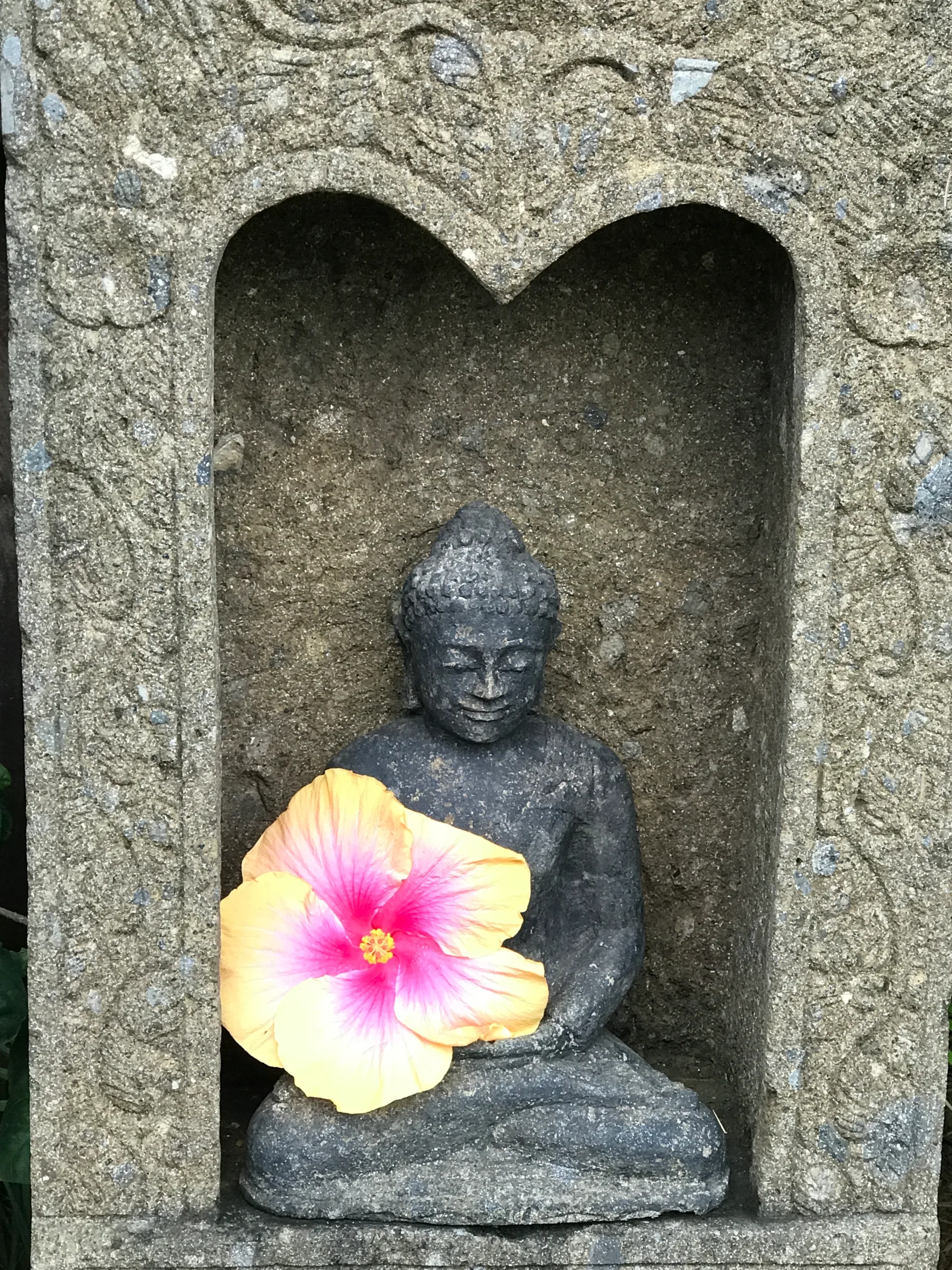
We’re delighted to welcome Bryony Whiteley S.heal, ISHPA — Spiritual Healer, Therapist and Guide as a contributor to The Wellbeing Hub and to share her inspiring take on meditation. If you’ve ever struggled with traditional meditation, restless thoughts, stiff sitting positions, or simply not knowing where to begin, you’re not alone. In this guest post, Bryony reveals three alternative ways to experience meditation and three powerful hacks to deepen your practice: 3 ways to escape traditional meditation and 3 ways to enhance. From movement and creativity to brainwave shifts and intuitive connection, discover how even the most committed non-meditator can unlock the calm, clarity, and wellbeing benefits of meditation.
Is Meditation Difficult? Here’s Why You’re Not Alone
When Deepak Chopra described meditation as a way of entering the quiet within, he had perhaps forgotten the endless to-do lists, replays and random observations that rush to fill the void of an empty mind. Maybe the world-renowned pioneer of consciousness had overlooked the aching back and restless legs of the lotus position, or the innate reluctance, shared by so many, to sit cross legged whilst attempting to visualise a flickering candle flame.
It seems that traditional meditation is not for everyone, but what if there was a way for non-meditators to meditate? To release its transformational magic and reap the rewards of mental, physical and spiritual well being, without the sense of a long, slow climb up a tall, steep mountain?
Imagine letting go of stress, improving the quality of your sleep and shifting into inner peace whilst following your joy. Picture strengthening your immune system, reducing pain and enhancing mental cognition whilst discovering your passion, or finally finding the key to unlock the ecstasy of traditional meditation afterall, a practice that dates back thousands of years and still holds its own in modern day society, clearly has a lot to offer!
The English word ‘meditate’ has its roots in the Latin ‘meditari’ (to think, contemplate, ponder), however the earliest references to meditation are found in the Indian Vedas, dating from 1500 BCE. Introduced to the West in the 18th Century and popularised around the turn of the millennium, countless medical and scientific studies have since validated this ancient practice. Indeed, a Harvard-affiliated study published in 2011, suggests that the benefits include an actual slowing of age-related decline.
The jury is still out, however, on the best way to meditate – and this gap between tradition and technique is great news for the non-meditator!
If you’re ready to turn tradition on its head and discover some new techniques for meditation, here’s three of the best for you to try:
Dance Meditation – think spontaneous dance, free dance or improvised dance. This is the sort of dance that bypasses the logical mind and allows the body to move freely without censorship, restriction or choreography. Here there is no right or wrong, simply instinctive expression to liberate the body and unburden the mind. Look for cinematic music, film scores and orchestral soundtracks to provide a graphic and dynamic musical journey for your dance meditation.
Nature Meditation – the earth has a natural vibration and attuning to nature is a sure fire way to quiet the mind, ground the body and connect to the wise and loving energy that surrounds us all. Nature meditation includes ‘forest bathing’ ( walking or sitting amongst trees), bare foot grounding to connect to the healing frequency of the earth, or simply placing your hand on a house plant, slowing your breath and leaving the chaos of the world behind.
Creativity Meditation – allowing yourself to get lost within a creative process takes the mind out of busy beta brainwaves and down into theta; the pattern of dreaming, imagination and flow. If you are drawn to writing, art or crafting, then follow your passion. If you don’t consider yourself to be creative, then so much the better! Choose your medium, let go of judgement and expectation and allow your intuitive mind to lead the way!
These techniques open the doorway to the benefits of meditation by offering alternative ways to cultivate mental clarity, foster emotional calm and develop a deeper awareness of oneself and one’s surroundings. Even the most committed non-meditator might just find themselves tempted to the meditation cushion and ready to give traditional meditation a go!
Find a quiet place where you won’t be disturbed, make yourself comfortable and try these 3 meditation hacks, to super charge the process and banish intrusive thoughts for good:
Release a Burst of Alpha Brainwaves – keeping your eyes open, look up as if you are looking into your own eyebrows. Keeping your eyes all the way up, take three long, slow breaths. On the final exhalation, keeping your eyeballs up, simply close your eyelids down. As you relax your eyes, notice a fluttering sensation beneath your eyelids. This is REM (Rapid Eye Movement) that characterises a dream-like state and propels you into a state of deep meditation.
Confuse the Busy Thinking Mind – when the mind is in conflict it tends to shut down (as anyone who’s had to make a difficult decision will know!) Use this to your advantage by stilling the mind with an impossible question such as contemplating what lies beyond the sky. Staring at random and repetitive patterns has the same effect of disabling the conscious mind.
Look for videos of moving kaleidoscopes or fractal images to provide a gateway to the quiet mind of meditation.
Connect to the Third Eye – The Third Eye or pineal gland is associated with intuition, insight, and higher consciousness. Connecting to the third eye as a meditation tool brings the attention away from the outer world and expands the inner landscape. Imagine that you are directing your breath in and out of a point within your head, where a line drawn between the ears and back from the eyes meets. Too far forward and you will experience a falling forward sensation, too far back and you will feel a backward pull.
Notice a sense of full body awareness and, from there, simply allow yourself to drift deeper.
When it comes to meditation, especially for the non meditator, the maxim that ‘at first it’s something you do and then it becomes who you are’, has never been truer. Five minutes a day is enough to create a positive habit, twenty one days is enough to create a habit for life and meditation is the habit that will nourish the divinity within you.
Sitting, walking, dancing or creating, there is a meditation for everyone and an invitation to even the most committed non meditator, to welcome this most ancient of practices into your life and discover the bliss of peace, calm and deeper connection for yourself.
About Bryony Whiteley S.heal, ISHPA
 It has been over 40 years since Bryony gave her first Psychic Reading. Since then, she has become a certified Spiritual Healer, Energy Healer, Life Coach, and Psychotherapist, working with many clients over the years. She is a member of The Association of Spiritualists and Healers as well as The International Spiritual Healer Professional Association. Bryony sees her role as a bridge between the therapeutic and the spiritual.
Whether someone is following a spiritual or religious practice, seeking to develop their own psychic and healing abilities, or searching for a way to overcome sorrow, confusion, and blockages, Bryony offers guidance and support. For those looking to find meaning in life—or even just a sign—she provides a compassionate and insightful space for exploration.
You can find out more about Bryony and her work at The Soul Calling







Leave A Comment