
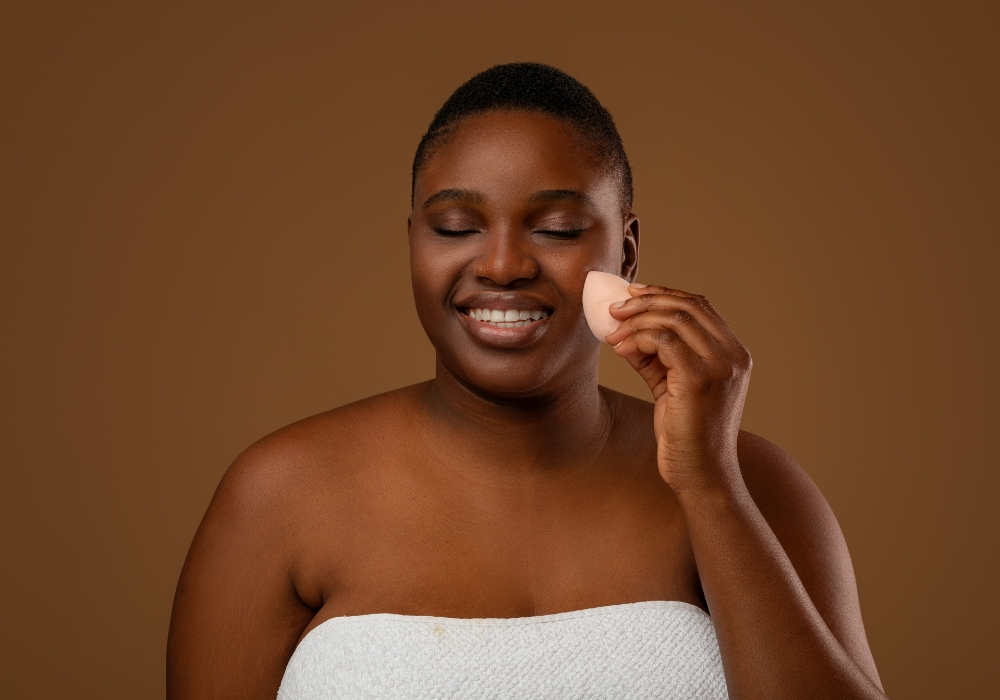
Finding the right foundation makeup for dark skin can feel overwhelming, especially when undertones come into play. The truth is, not every brand gets it right, and that’s why so many women struggle with foundations that look too ashy, too orange, or simply don’t blend naturally. The good news is that once you understand your undertone and know what to look for, choosing the best dark skin foundation becomes much easier. To help you avoid those common foundation mistakes and discover what really works, makeup artist and beauty expert Denise Rabor shares her tips on identifying your undertone and finding the best foundation for dark skin.
Beauties, I can’t tell you the amount of times that I get asked by women about how to determine their correct undertone.
I guess this is one of those things that may never learn about when they start wearing makeup, but not knowing your undertone means that you often find yourself with lots of foundation failures… you know the foundations or concealers that you bought thinking that they were right for you only to get home and discover that they were too pink, too yellow or just not right!
This is a problem experienced by women of all cultures! Have a read for advice on finding your correct undertone as well as some of the best foundations for dark skin.
Firstly, what is skin undertone?

Your skins undertone is the colour that sits beneath the skin, that determines the skins overall tone.
What are the main undertones for black skin?
Cool, warm or neutral are the general undertones for all skin types, with Yellow (warm) and red (cool) undertones being are the two main undertones in dark and black skins.
How should you test your undertone?
The best time to do this is in daylight as it provides pure, true light.
The simplest way is to look at the skin on the in inside part of your arm because that’s one of the few places that benefits from sun light.
If you prefer, in daylight look in a mirror, get someone to take a photo of you from the front and the side or of course you can do a couple of selfies.
Tip: do this with just a bra or camisole on so that you’ll be able to see the difference between your face and your neck and chest.
Knowing your undertone
I think we’ve all seen evidence of when a woman’s foundation has not taken account of her undertones: it can look ashy, or it can just look wrong.
Foundation is not designed to look like a mask, when you’re wearing the best foundation for you and it’s applied well, it should enhance your skin, making it just look like your best skin.
Also for me, using a foundation with the correct undertone, makes it easier to get away with a shade that’s not an absolute match.
How to tell whether your foundation compliments your undertone
Aside from looking ashy, it simply won’t look right. It can look like a mask or like you’re wearing someone else’s makeup.
Don’t forget to think about your skin type and the finish that you’d like: having an oily skin and using a creamy foundation is never going to look great.
As with sunblocks stay away from any foundation that contains zinc oxide as it can make black skin look ashy and grey.
How to test the shade on your skin
I always say that its worth testing a potential foundation on more than one part of the body; try it on your neck and on your face especially if there is a big difference in colour between your upper chest and your face.
Also always try to do a foundation test in daylight and again take a pic, so that you can really see what it’s doing
Foundation can be an investment and an ally so I always advise women to take a few little sample pots with them when makeup shopping so that you can really try a product out at home, in your own time, under different lighting conditions before you commit.
You can also mix your foundations
You can also mix your foundations to find your perfect shade, but you have to know what you are mixing: make sure that you mix from the same range, mix gradually and keep testing the mix to ensure balance.
It’s worth noting that many modern formulas are serum based or contain ingredients that help them to adapt to your skin tone and this works really well when you’ve chosen the correct undertone.
Managing Hyperpigmentation
Using a foundation a shade lighter can help with areas of hyper-pigmentation and do go for a medium to full coverage formula as this will give you the ability to control how you apply it. You’ll be able to build it up with more cover in the pigmented areas while having less coverage on the rest of your face.
The other option is to use a good concealer to cover hyper pigmented areas and this should be lighter than the skin.
Black women, as well as other women often have differing skin tones on their faces and decolletage.
The idea is to try and find a shade that can help to unify these contrasting tones.
Denise Rabor
Here are some of the best foundations for dark skin…
Warm undertones are generally more common that cool tones and most modern foundations are balanced to provide neutral coverage that compliments most skin tones. Very dark skins should avoid using overly yellow foundations and opt for a more neutral option.
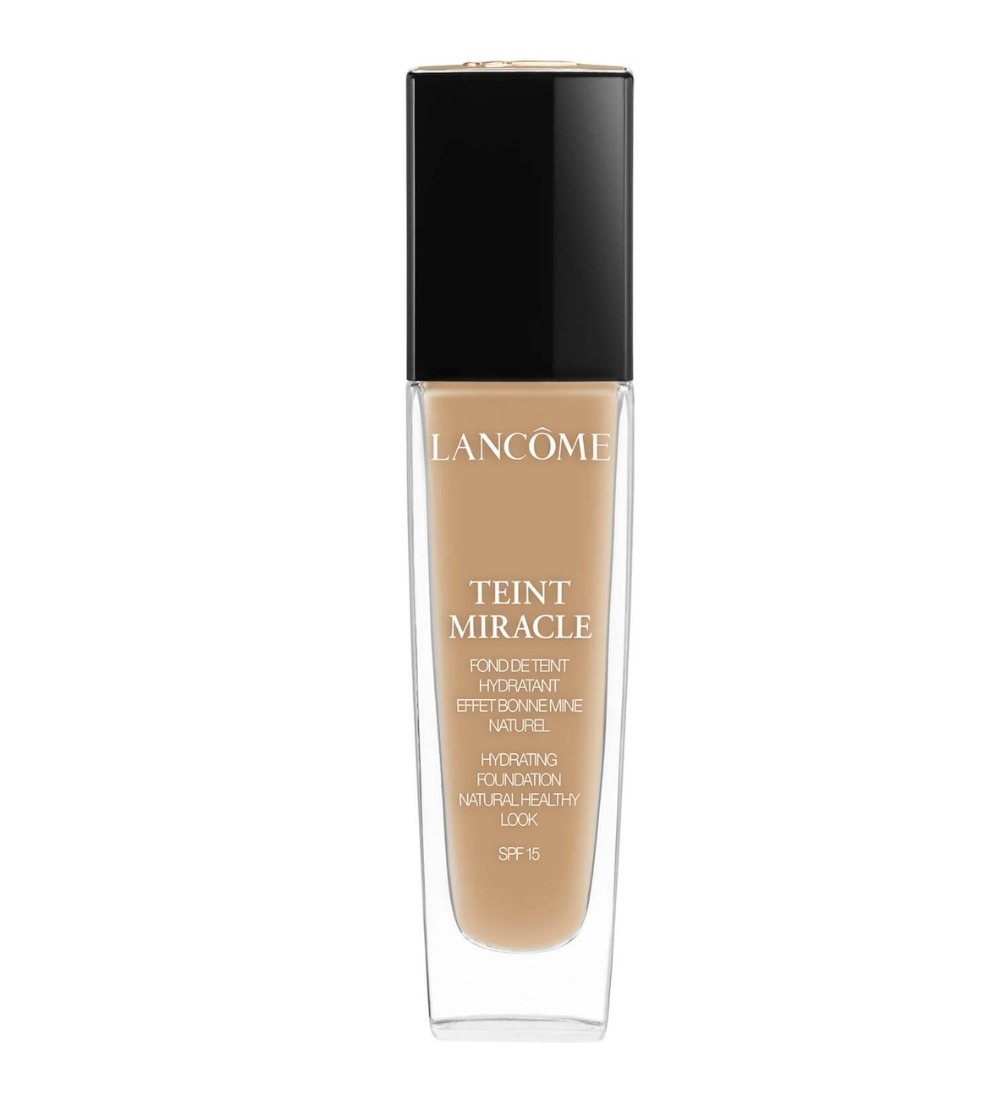
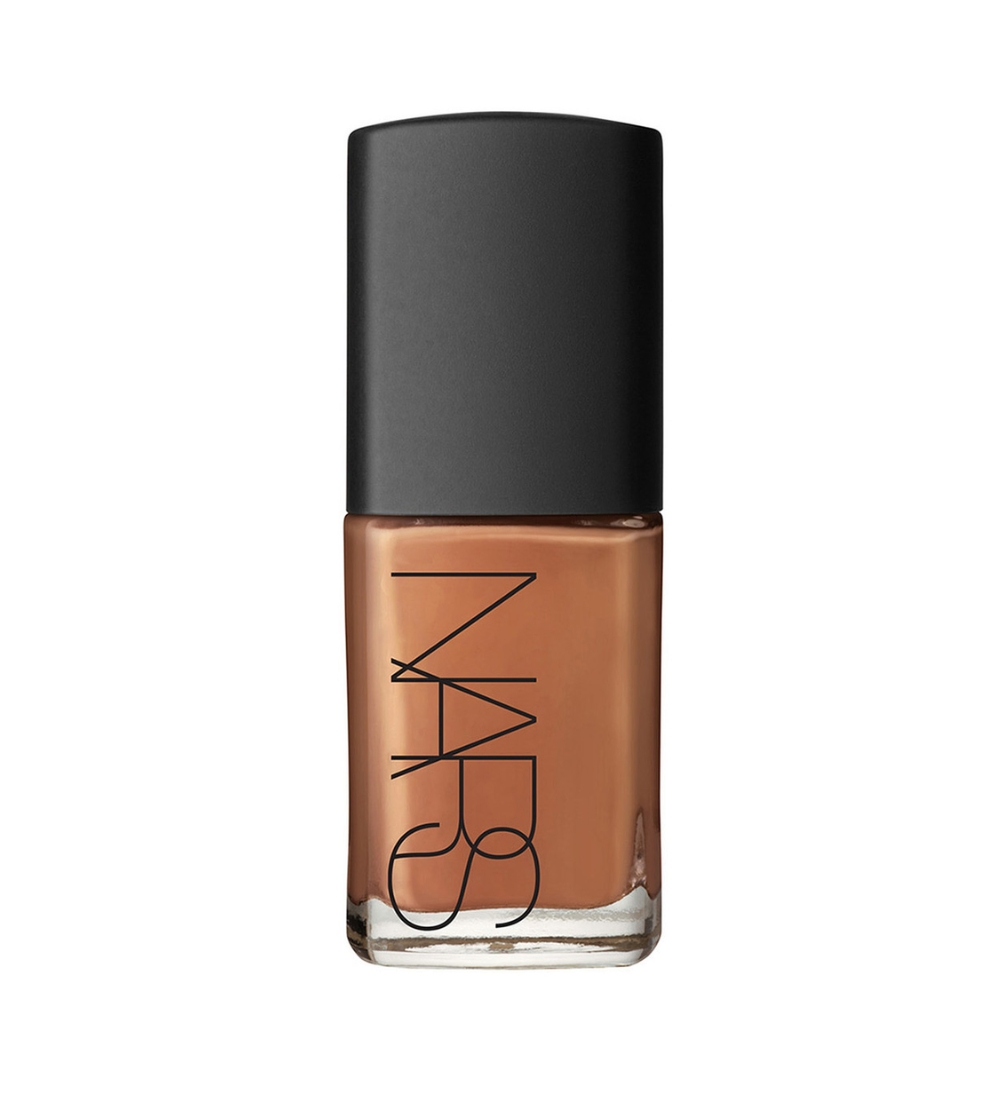
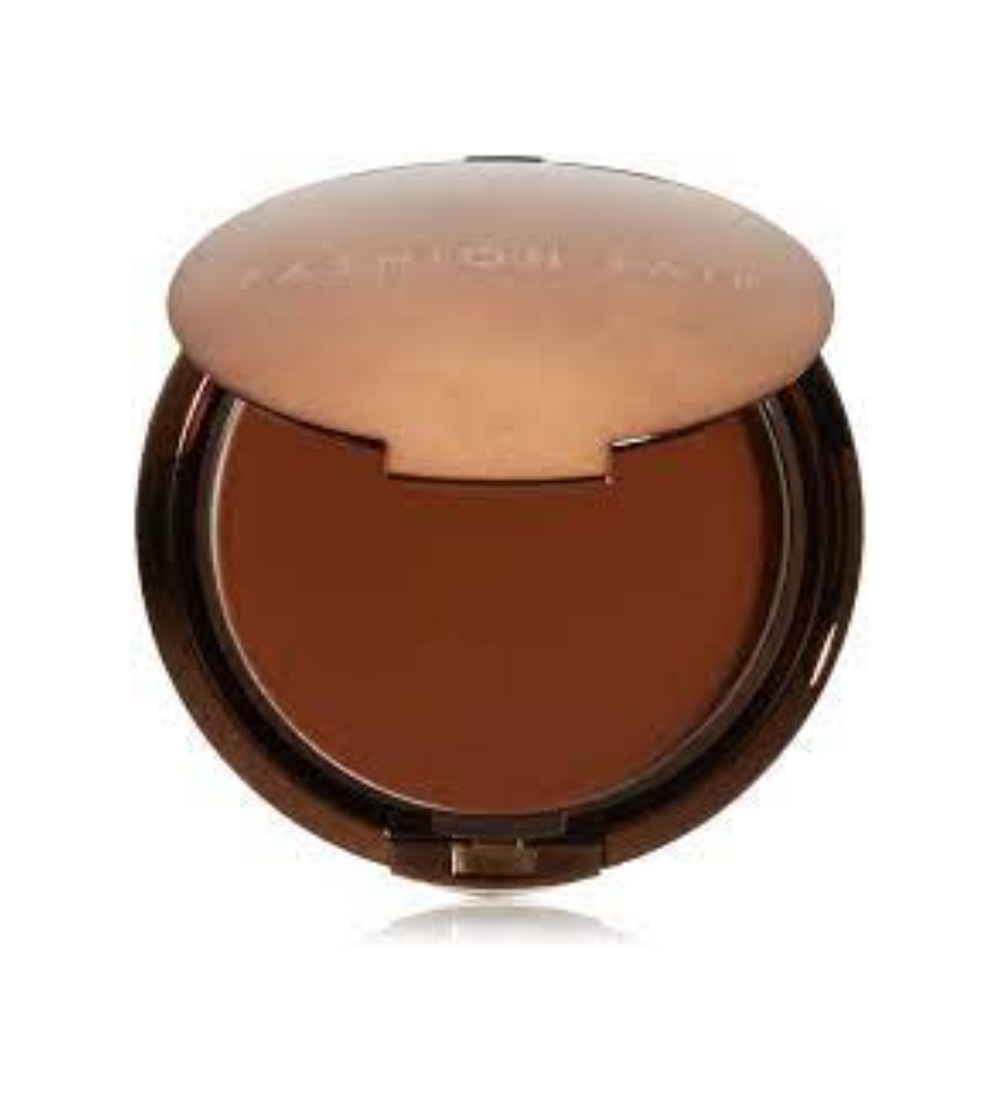
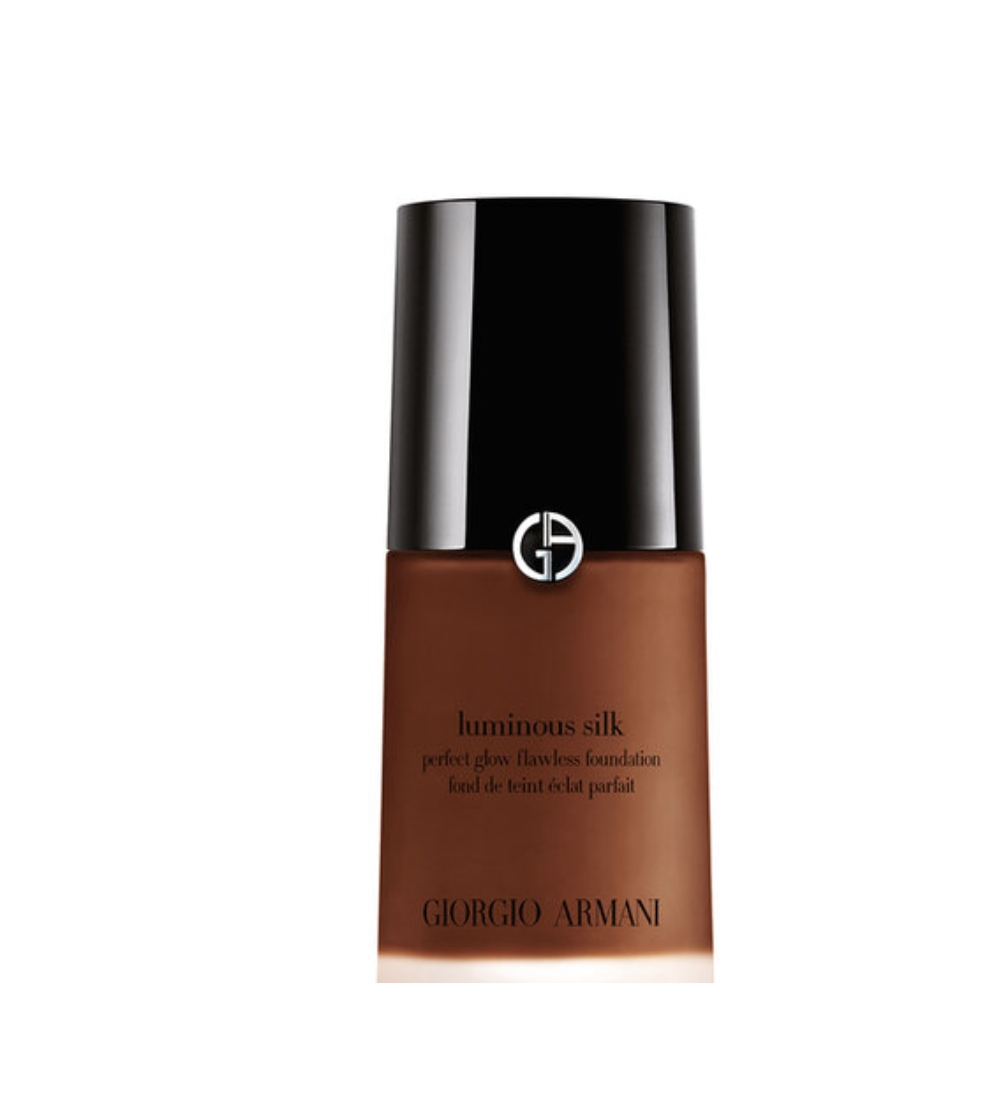
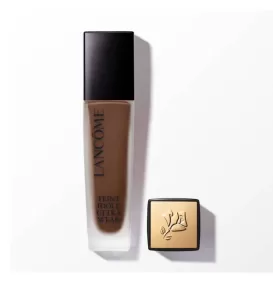
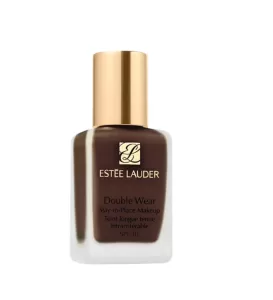
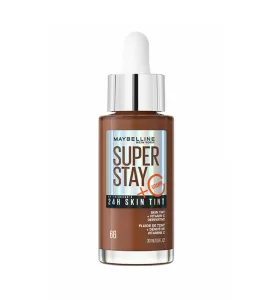
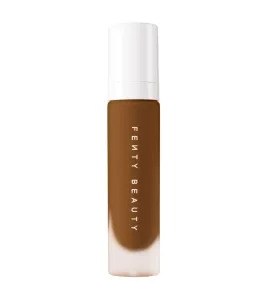
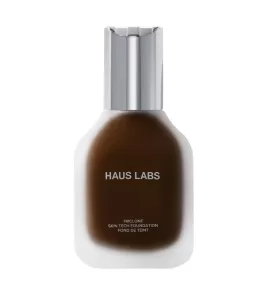
Choosing the perfect foundation for dark skin doesn’t have to be trial and error. Once you know your undertone and test shades in the right lighting, it becomes so much easier to find a formula that works with your complexion rather than against it. Whether you’re dealing with hyperpigmentation, oily skin, or just want that natural skin-like finish, there’s a dark skin foundation out there for you. With so many brands now offering inclusive shades, it’s about finding the one that enhances your unique beauty. Remember—foundation should never mask your skin, it should celebrate it.
(*PR gift/sample)
May contain affiliate links
Post updated 28th August 2025





Leave A Comment